
Six in a Single Well
A Chronicle of One of the Most Preventable Categories of Fatal Workplace Injuries
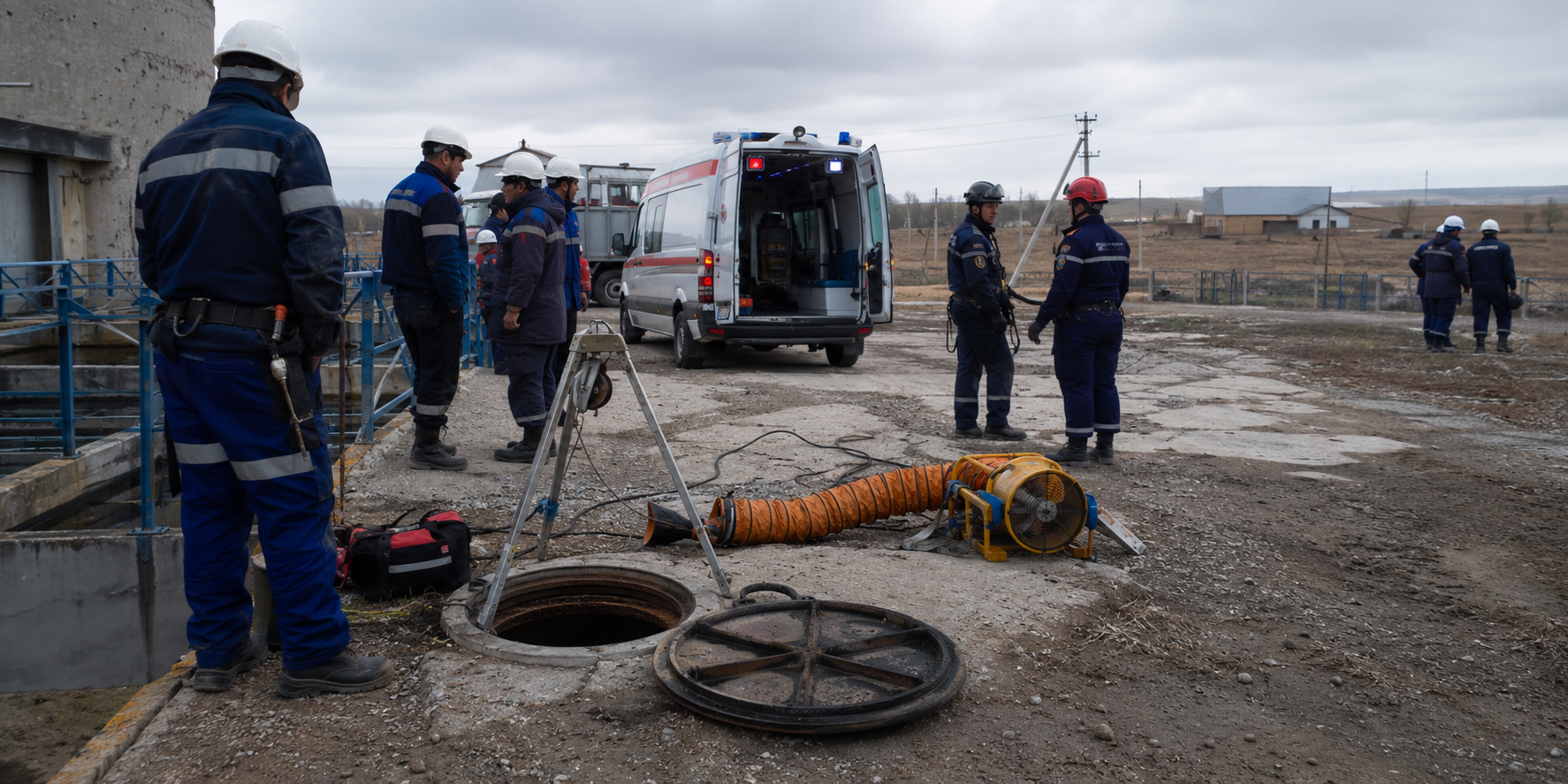
20 July 2026, Zholaman village, Aktogay District, Pavlodar Region. The emergency medical service received the call at 12:01. Six men were pronounced dead on the premises of a local enterprise. They were born in 1963, 1975, 1983, 1998, 2006 and, according to the regional emergency medical service, 2009. A man born in 1988 was admitted to Aktogay District Hospital. According to the regional health department, the preliminary diagnosis was moderate carbon dioxide poisoning.
Some publications stated that the youngest victim was born in 2008. Until the final findings of the investigation are released, it is more appropriate to rely on information from the emergency services and to explicitly note the discrepancy between open sources.
The State Labour Inspectorate confirmed the deaths of six people and stated that the causes and circumstances were being established.
According to a preliminary account circulated by the media with reference to social media posts, the men may have been attempting to repair a faulty electric pump in a sewer manhole. At the time this article was prepared, that detail had neither been officially confirmed nor denied.
The management of the enterprise confirmed the deaths of six of its employees and pledged support for their families.
The police launched a pre-trial investigation and, citing Article 201 of the Criminal Procedure Code, declined to disclose further details.
If the 2009 year of birth is confirmed, the youngest victim was sixteen or seventeen years old.
The Arithmetic Speaks for Itself
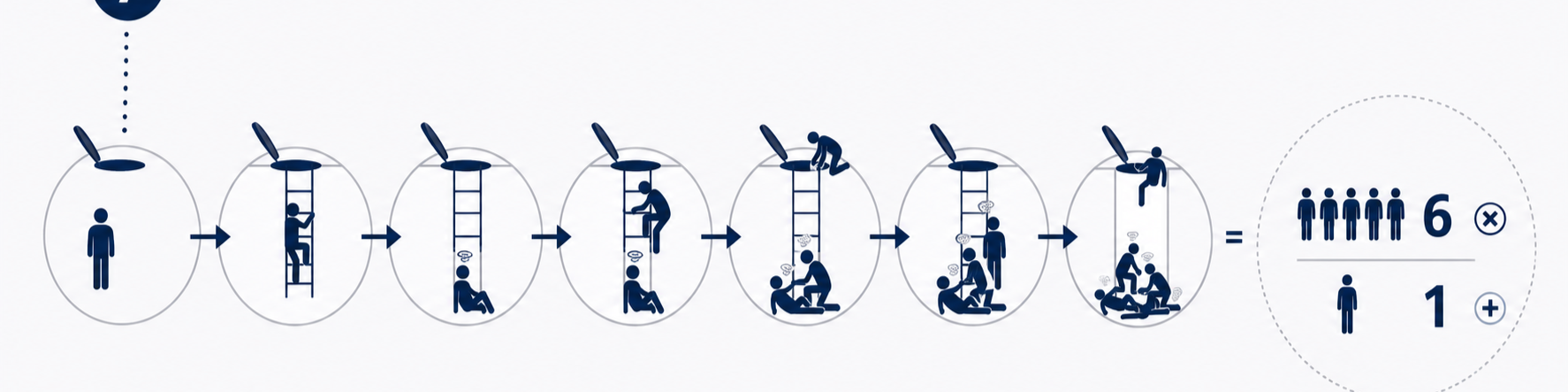
There is no official chronology of the incident yet. The investigation will reconstruct it, and until its findings are published, any reconstruction remains speculative.
But the arithmetic alone—seven people around a single manhole—recalls a scenario documented in hundreds of investigations worldwide.
The first person descends and loses consciousness within seconds. The second sees what has happened and climbs down after him—without a detector, without respiratory protection, holding his breath. Then the third. Then the fourth. Materials published by the US National Institute for Occupational Safety and Health (NIOSH) cite an estimate that a significant proportion of those killed in confined spaces are not the people who started the work, but those who attempted to rescue the initial casualty.
A confined space does not kill one person at a time—it kills in a chain.
And the only way to break that chain is well known: no one should descend after an unconscious person without proper training, a fall-arrest and retrieval system, and self-contained breathing apparatus. Not a colleague, not a brother, not a father. The only correct response is to call professional rescuers immediately by dialling 112.
That rule costs nothing.
The Invisible Enemy
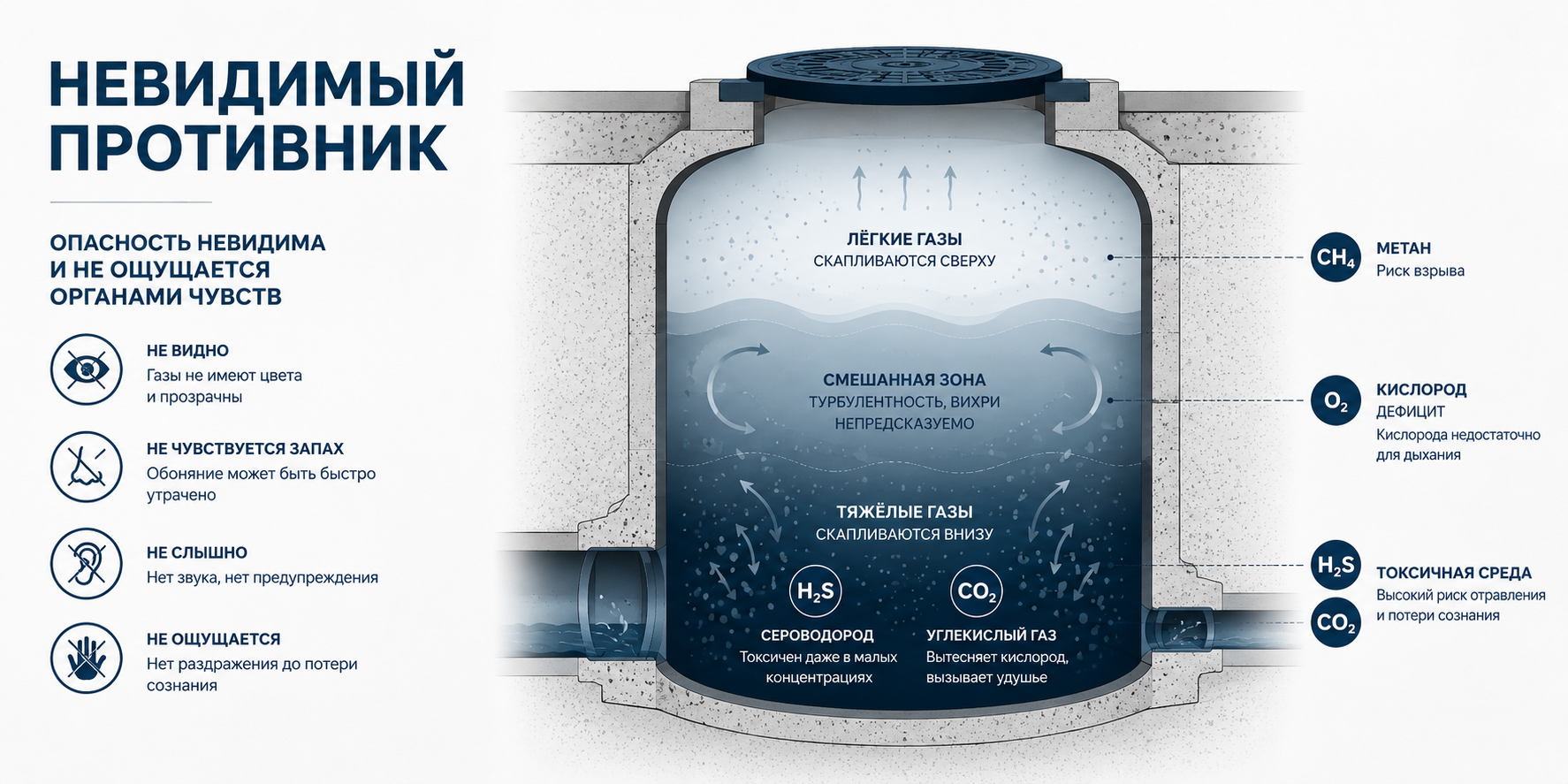
A sewer manhole is dangerous not because of contamination itself, but because of its invisible atmosphere. When organic matter decomposes without access to air, it produces hydrogen sulphide, methane and carbon dioxide. Hydrogen sulphide and carbon dioxide are heavier than air and accumulate in lower areas; methane is lighter than air and, under certain conditions, collects in the upper part beneath the cover. The actual situation depends on ventilation, the structure of the chamber and the processes taking place inside it. It is therefore fundamentally impossible to assess the danger by sight: one metre below the opening the atmosphere may be lethal, while above the manhole it may appear completely normal.
Hydrogen sulphide is doubly deceptive. At low concentrations it has the characteristic smell of rotten eggs, which may seem to provide a warning. At higher concentrations, however, it quickly deadens the sense of smell: the concentration rises while the odour disappears. The disappearance of the smell does not mean that the danger has disappeared.
Oxygen deficiency and high concentrations of toxic gases can cause unconsciousness within a very short time—without a sensation of suffocation, without coughing and without any opportunity to call for help.
Official reports concerning Zholaman referred to carbon dioxide. In practice, sewer systems usually present a combination of hazards: toxic gases, a flammable atmosphere and oxygen deficiency. Only expert examination can determine the precise mechanism. From a safety perspective, however, this changes nothing: the atmosphere must be instrumentally monitored before entry and throughout the work.
This Happens Regularly
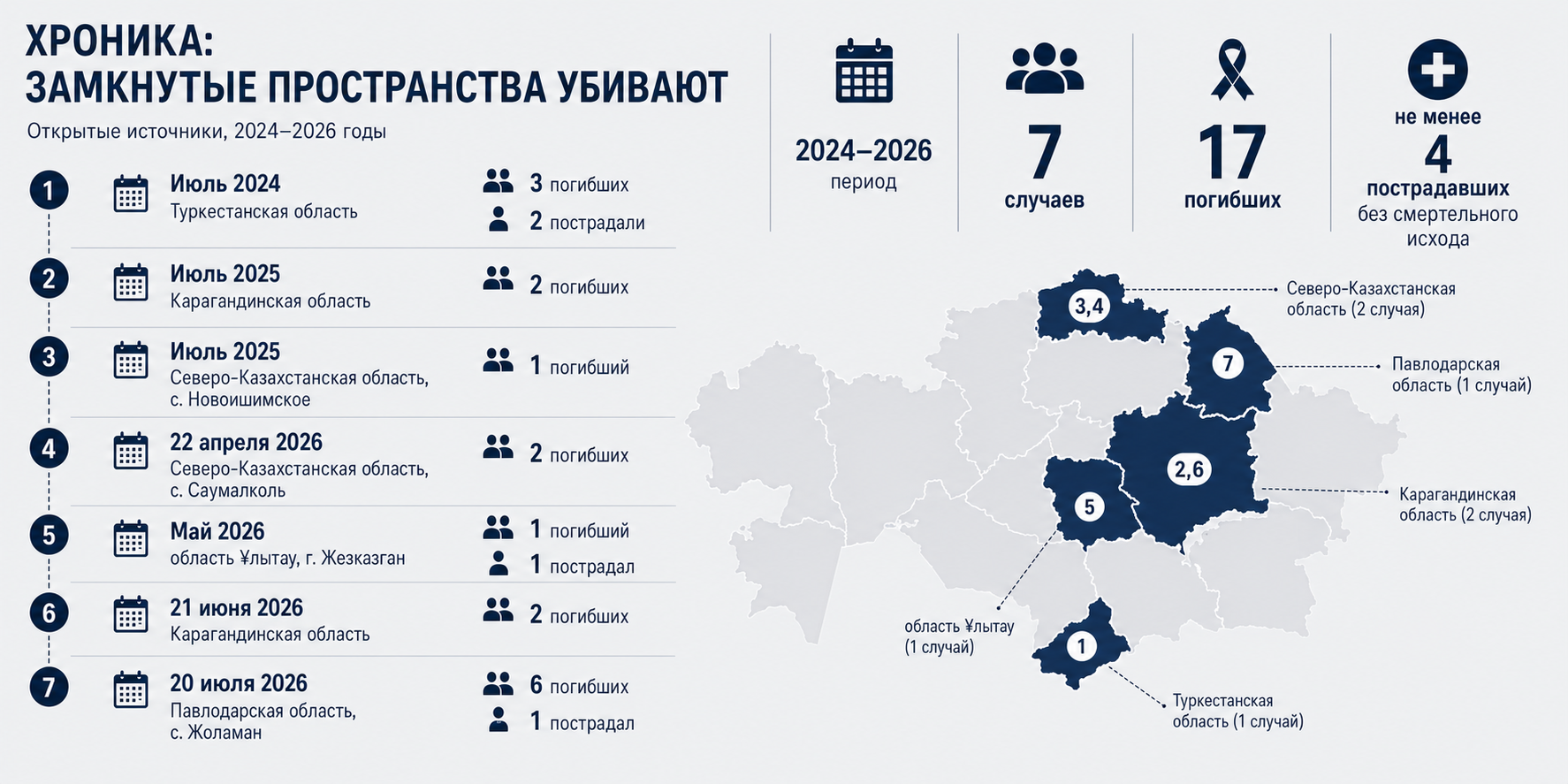
Zholaman is not an anomaly. It is another point on a line that can be traced through open sources almost month by month.
July 2024, Turkistan Region. Three workers died in a sewer manhole; according to court records, two others suffered poisoning. The circumstances and safety violations became the subject of a criminal case.
July 2025, Karaganda. Two maintenance fitters employed by a municipal utility, aged 29 and 46, died while servicing a sewage pumping station. One entered the manhole, and the second attempted to help him. Published materials identified the cause of death as the toxic effects of unidentified gases, fumes and vapours; hydrogen sulphide specifically was not confirmed by the expert examination.
July 2025, Novoishimskoye village, North Kazakhstan Region. A pumping-station operator born in 1969 was found dead in the enterprise’s main sewer manhole. According to the police, the preliminary cause was exposure to hazardous gaseous substances.
22 April 2026, Saumalkol village, Aiyrtau District, North Kazakhstan Region. An electrician and a fitter employed by a contractor, born in 1978 and 1976, died during repair work at a sewage pumping station. Initial reports indicated poisoning by hazardous gases. A pre-trial investigation was opened into possible violations of occupational safety regulations.
May 2026, Zhezkazgan. An employee of a municipal enterprise died after entering a manhole and losing consciousness almost immediately. A second worker was brought out alive and admitted to hospital in serious condition. The detailed sequence of events remained under investigation.
21 June 2026, Karaganda. Two men, aged 59 and 63, died in a manhole on the premises of an enterprise. The State Labour Inspectorate launched a special investigation. Published reports also quoted the owner of the site as saying that the work had not been coordinated with him.
20 July 2026, Zholaman village. Six dead and one person hospitalised.
Across these seven cases reported in open sources over a two-year period, seventeen people were killed. This is not official national statistics, but only the total number of deaths in the incidents listed in this article. Kazakhstan does not maintain a separate publicly available database specifically for confined-space accidents, and the true figure is almost certainly higher.
A Judicial Precedent
In the case concerning the deaths of three workers in Turkistan Region, charges were brought against the supervisor of a water and sewerage unit. The court of first instance acquitted her, but the appellate court overturned that decision, finding that she had in practice supervised the work, conducted safety briefings and was responsible for organising safe working conditions.
She was convicted under Part 4 of Article 156 of the Criminal Code, “Violation of occupational safety regulations resulting through negligence in the deaths of two or more persons.” In February 2026, the court of cassation upheld the conviction.
No single case creates an automatic rule for every workplace accident: liability in each case depends on the evidence, the person’s official duties and the established causal link. But the courts have made one principle clear: what matters is not only the formal allocation of responsibilities, but also the person’s actual role in organising and supervising the work.
A separate issue in the Zholaman case is the age of the youngest victim. If the investigation confirms that a minor was involved in hazardous work, it will also have to establish how he came to be among the workers. Kazakhstan’s labour legislation expressly prohibits persons under the age of eighteen from being employed in harmful or hazardous working conditions, and confined-space work unquestionably falls into that category.
What the Rules Require—and What It Costs
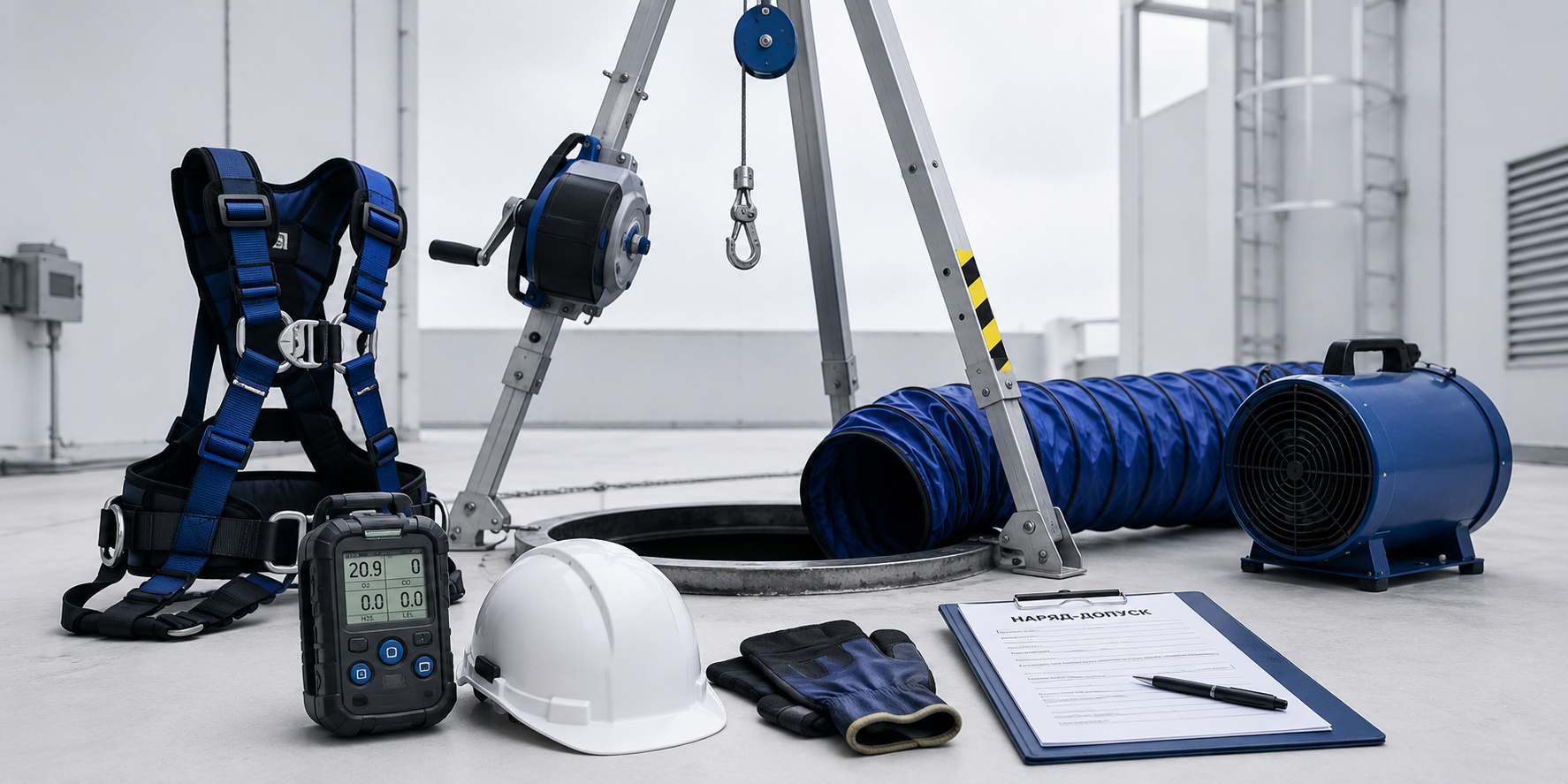
Work in manholes and other confined spaces is classified as high-risk work. Specific procedures vary depending on industry regulations and the enterprise’s internal rules, but the essential requirements have remained unchanged for decades: a permit-to-work, risk assessment, atmospheric testing before entry and during the work, ventilation, designated attendants, a fall-arrest and retrieval system, reliable communication and a rescue plan prepared in advance.
None of these measures requires imported technology, outside consultants or months of implementation.
Now to the question of cost, because “it is too expensive” is the most common unspoken objection.
A standard safety kit for a work crew includes a portable four-gas detector—for oxygen, hydrogen sulphide, carbon monoxide and combustible gases—roughly the size of a mobile phone; a forced-air blower with ducting; a tripod with a rescue winch positioned over the opening; and full-body safety harnesses.
The estimate of one to three million tenge should be treated as an approximate market figure that varies by manufacturer and configuration. But that is the correct order of magnitude: less than the price of a used passenger car and incomparably less than the cost of even one such incident, even if only the financial losses are counted.
And the most important rule—“if someone collapses, do not go down; call 112”—costs nothing at all.
Five Rules That Break the Chain
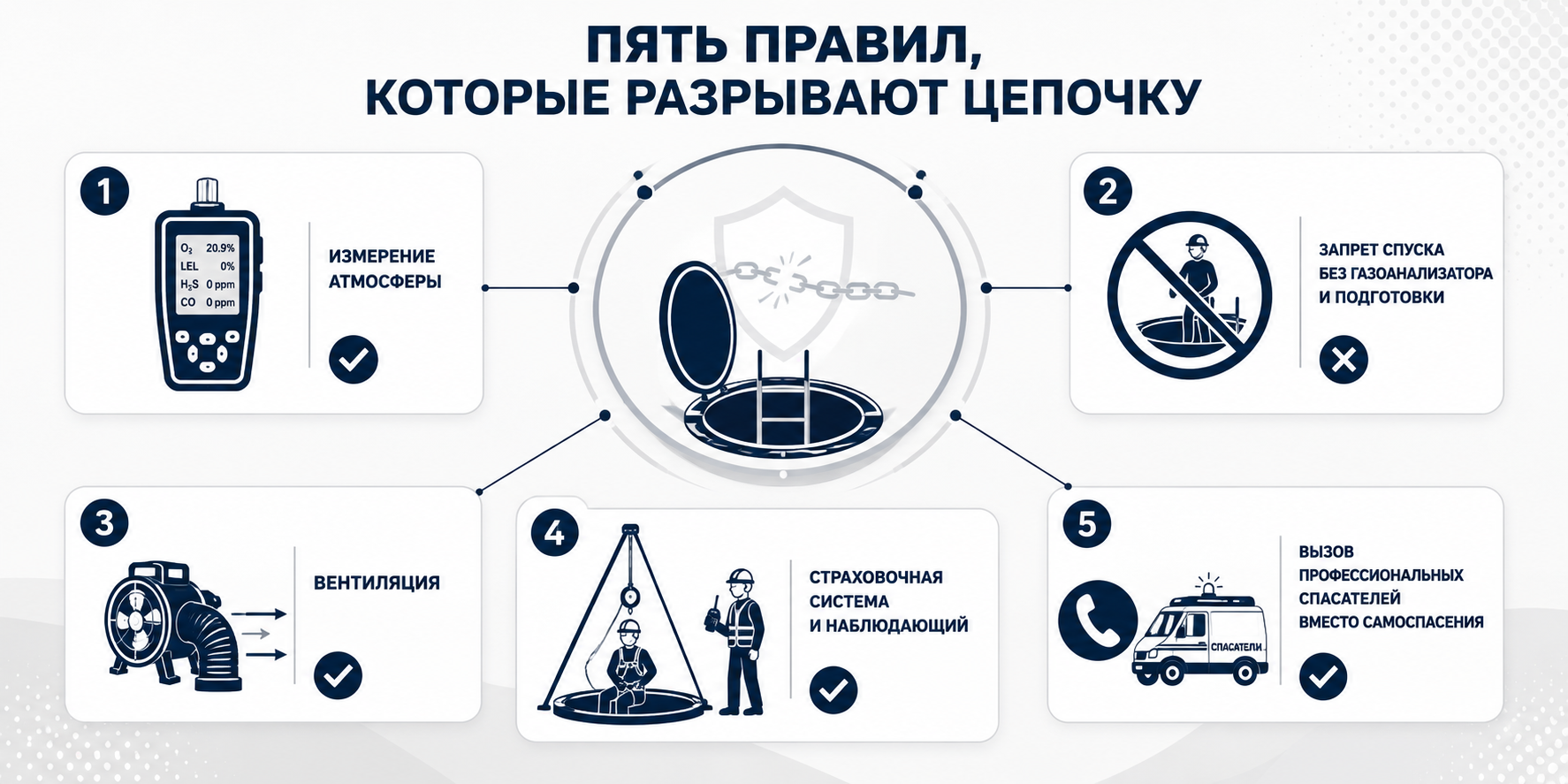
First. Every confined space—a manhole, tank, vessel, silo or pit—must be treated as potentially hazardous until measurements confirm that the atmosphere is safe. Not “it looks fine,” not “we went down there yesterday,” but actual instrument readings taken here and now.
Second. No functioning gas detector and no trained personnel means no entry. This is not excessive caution; it follows directly from human physiology. A lethal atmosphere cannot be reliably detected by the senses.
Third. Ventilation must begin before entry and continue throughout the work. An open manhole does not ventilate itself: heavy gases remain at the bottom.
Fourth. The worker below must wear a safety harness connected to a retrieval system. Trained attendants, communication equipment and a means of extraction must remain above so that rescue can begin without sending a second person into the confined space.
Fifth. If a person below loses consciousness, untrained colleagues must not descend after them. Professional rescuers must be called immediately. Entry is permitted only by a trained rescue team equipped with self-contained respiratory protection.
This is the most difficult rule psychologically and the most important statistically. It is the point at which the chain that turns one casualty into six can be broken.
In Place of a Conclusion
The investigation and expert examinations will determine what exactly happened in Zholaman. Until their findings are released, it is impossible to state which gas was the immediate cause, who entered the manhole first or which procedures were violated. But this category of risk has been understood for decades and can be reliably controlled through five essentials: atmospheric testing, ventilation, fall protection and retrieval, continuous attendance and a prepared rescue plan.
The central practical conclusion therefore does not require waiting for a court judgment. Employers—from national companies to small rural limited liability partnerships—must identify and inventory all confined spaces at their sites, restrict and mark access, approve entry and rescue procedures, provide workers with functioning equipment and conduct at least one serious emergency drill. Six deaths in a single day at a single enterprise are not a reason for premature speculation about the sequence of events, but a reason to immediately examine how such work is organised everywhere else.
The answer has long been known. It is simple and costs less than a car. Failing to ask the right questions today means accepting that one day we may read this same article again—under the name of another village.