

HSE System Diagnostics:
Finding 'hidden' problems before an incident occurs
In many companies the key risks stem not from ignorance of rules but from hidden systemic failures: procedures exist but don't work, inspections are carried out but lead to no changes, incidents are not investigated but merely concealed.

And on a global scale the losses are enormous:
Millions of people die each year from work-related causes and hundreds of millions are injured — this reflects systemic inefficiency in risk management, not just formal non-compliance.
Why diagnostics are needed

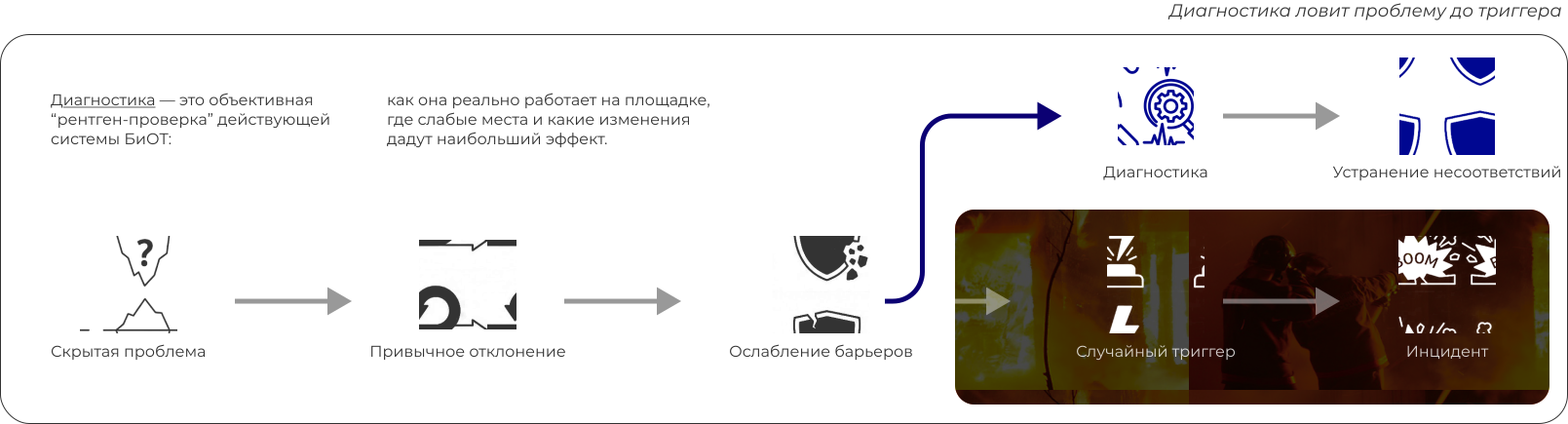
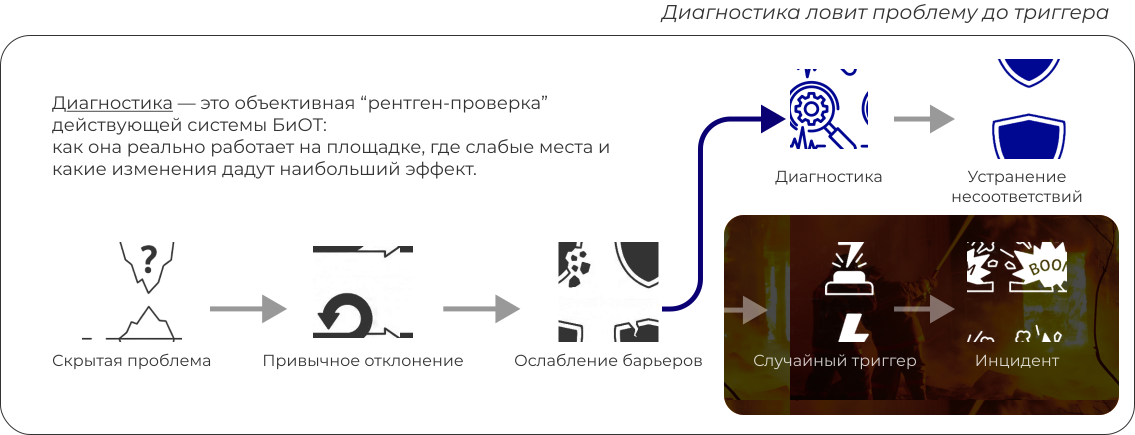
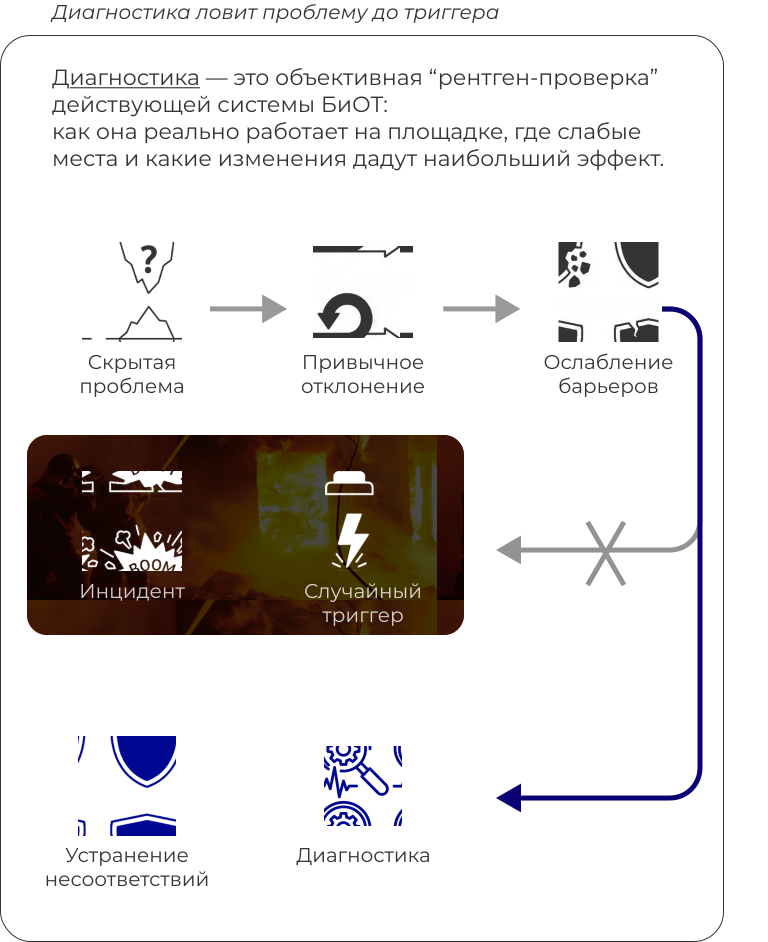
The goal of diagnostics is to help management see causes, not just consequences:
- where controls have become merely formal;
- which barriers (technical/organisational) are operating unreliably;
- where risks have been normalised ('it's always been this way');
- why staff don't report near-misses and unsafe conditions;
- how processes (PTW / LOTO / JSA / Contractor management) actually work in practice.
What we diagnose
We assess the HSE management system as a management mechanism (using the PDCA model) — from planning and leadership through to performance verification and corrective actions.
The approach aligns with the principles for building and improving occupational health and safety systems set out in ISO 45001.
The diagnostic typically covers:

Key risk management
PTW, SIMOPS, LOTO, contractors, MOC, barrier management, emergency preparedness.

Incidents and near misses
Quality of investigations, reasons for under-reporting, learning from events.

Leadership and safety culture
How leaders set priorities, how decisions are made, how feedback loops operate.

Field practices
How people actually perform work, alignment of procedures with real conditions.

Competence and oversight
Training, permits, work observation, auditing — how formal these actually are.
What the client receives
To ensure the result is practical, we deliver not a 'thick report for the sake of reporting' but an implementation package:
Why this works
We don't look for 'culprits'. We assess the system and propose solutions — so that safety becomes a sustainable element of operational performance, not just 'compliance'.

HSE system maturity map
What is working, what is not, with analysis preserved.

Top 10/20 priority gaps
With an explanation of 'why this matters' (impact on people, production, reputation).

Improvement roadmap
Over 90 days / 6 months / 12 months (quick wins + systemic changes).

SMART action plan
With owners, deadlines and completion verification criteria.